2700 N. Beachwood Drive Los Angeles, California


 INFORMATION
Em Davenport Christian John Munks Leah Ke Yi Zheng Calvin Miceli Nelson Mary Stephenson Peter Tomka
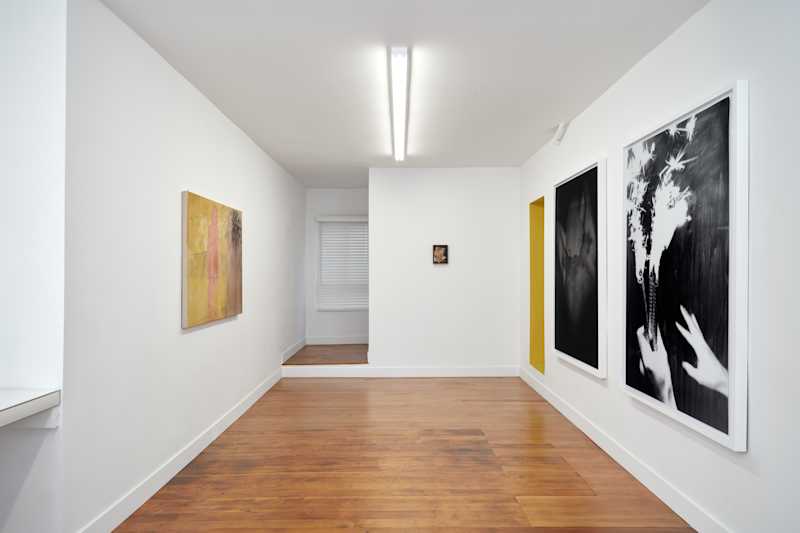
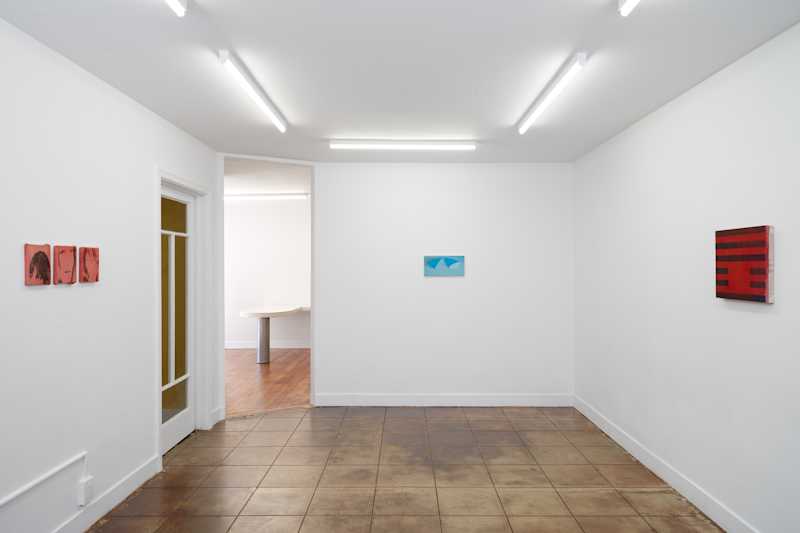
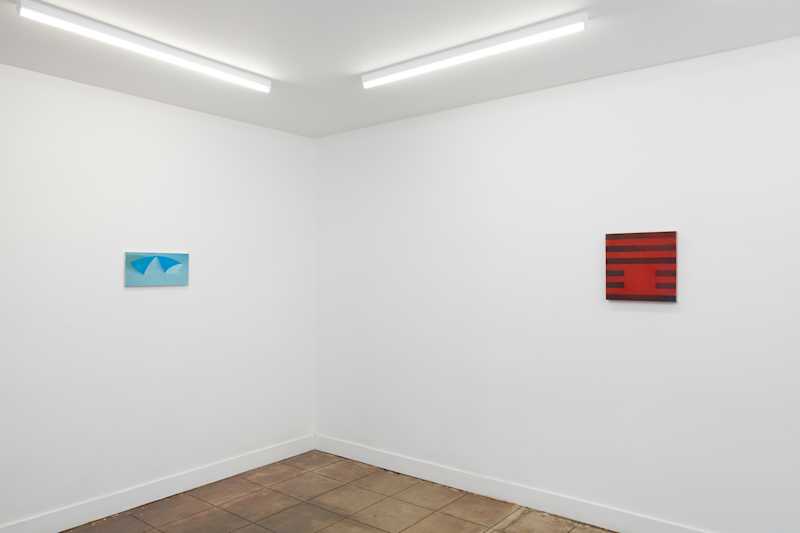
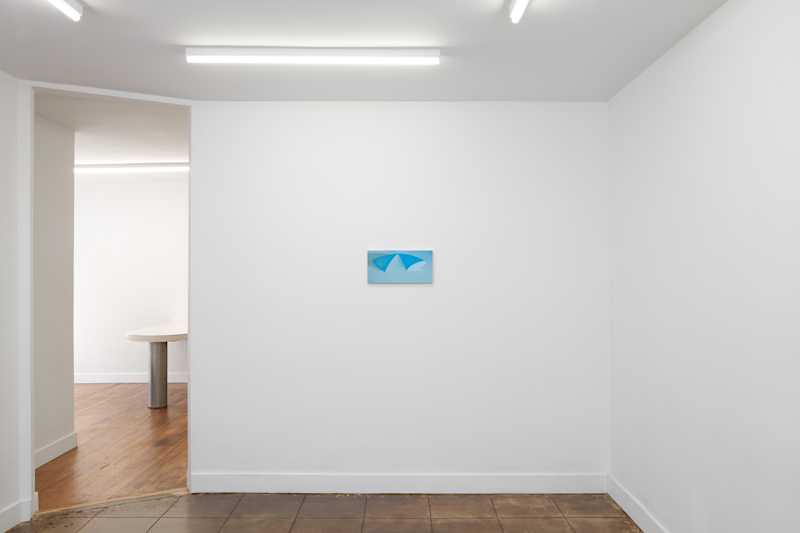
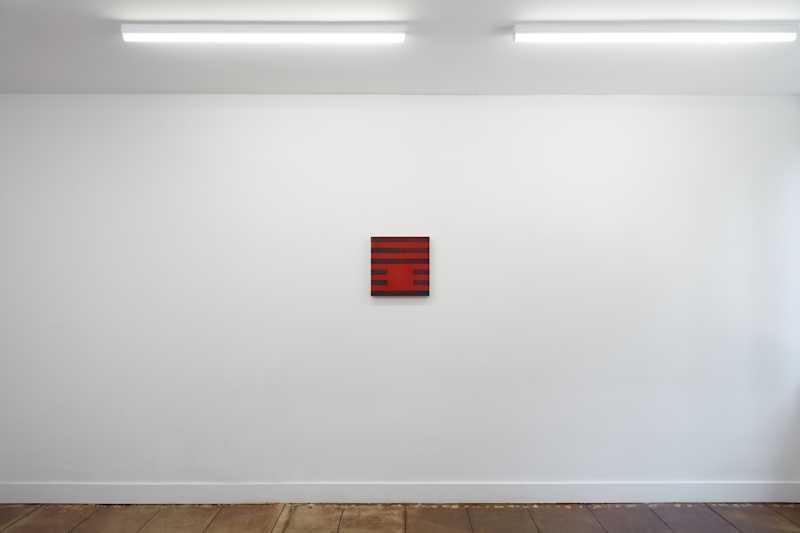
The exhibition brings together a group of artists whose practices emerge in the aftermath of the stable image. Across painting, printmaking, and photography, each artist treats representation as something that refuses to stay put: an afterimage, a memory, a circulated fragment, altered by the processes meant to preserve it. Rather than a fixed encounter between subject and viewer, the image is fixed in a state of continual return, re-occurring rather than simply present.
The works in the exhibition operate through residue. Surfaces behave like compressed memories, carrying the emotional charge of something mediated, half-lost, and still returning: stretched, obscured, repeated, erased. They carry evidence of their own passage through systems of mediation (the screen, the photograph, the archive, the family album, the cultural icon). Working within a culture defined by the mass inundation of images, these artists approach material not as an escape from digital life but as a way of destabilizing it. Texture, calibration, and spatial tension replace direct depiction; meaning accumulates through atmosphere and encounter rather than arriving as a fixed message.
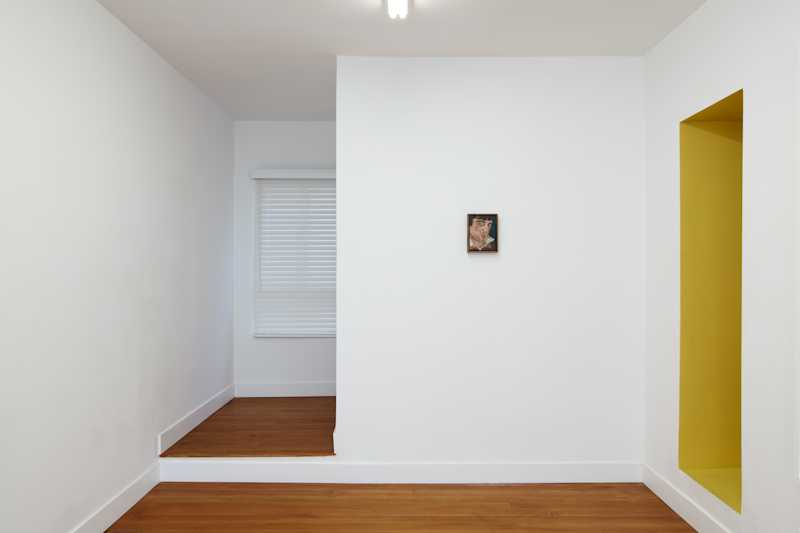
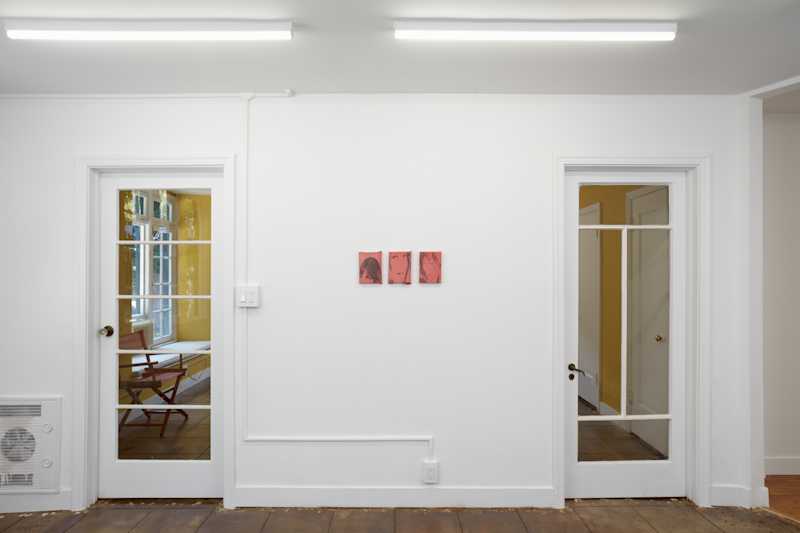
Em Davenport (b. 1999, Missouri) draws from images already fixed in the cultural imagination: a photograph of Jane Birkin, the sleeve of a punk album, a fashion editorial. These are pictures worn smooth by repetition, but Davenport’s process runs appropriation's usual logic in reverse. Davenport hand-paints her sources to appear screenprinted, concealing her mark inside a surface that reads as mechanical. The artist’s hand is hidden beneath the appearance of a process built for reproduction, not authorship. What's left is a residue of something once specific, generalized now into a diffuse atmosphere.
Leah Ke Yi Zheng's (b. 1988, Wuyishan, China) paintings, stretched silk buckles and tilts at the edges, leaving the support itself as tenuous as the imagery it carries begin by refusing the rectangle. Stretched silk buckles and tilts at the edges, the support itself as tenuous as the imagery it carries. Her paintings often feature gears, bolts, fragments of industrial-age machinery, disembodied from any working mechanism and submerged in pools of color like sediment settling out of solution. The parts don't assemble into a machine; they drift, singular and stripped of function.
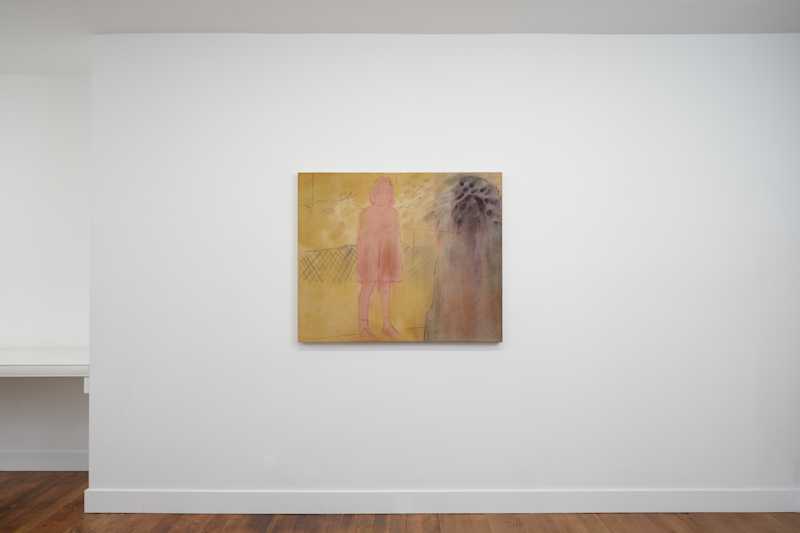
Christian John Munks' (b. 1985, Copenhagen; Denmark) paintings are built through a process of construction, erasure, and reconstruction. Munks pulls from a shifting archive of home video, dream, family photograph, and youth documentary, often folding in his own reflection as source material, so that what results is a composite, assembled slowly enough that earlier decisions in his works remain legible beneath later ones. He treats that underlayer — the pentimento — as content in its own right: what's painted over doesn't disappear so much as go on haunting what's visible, close enough beneath the surface to still be felt in it.
Calvin Miceli Nelson (b. 1993, Los Angeles, CA) charts a parallel disassembly of the self, holding its pieces against the symbols meant to contain them. Nelson’s imagery is linked to a written narrative he develops in tandem to his painting practice. Yet the figures in his paintings are stripped of their context, circulated and re-occurring, until what's left is not a story, or characters, but their archetypal charge
Working on canvas primed with rabbit-skin glue, Mary Stephenson (b. 1989, London, UK) builds her surfaces from thin veils of oil that seep unevenly, each layer becoming a negotiation rather than a decision. Stephenson constructs the architecture of the unconscious from which the image surfaces like memory; incomplete and always available to be built over again.
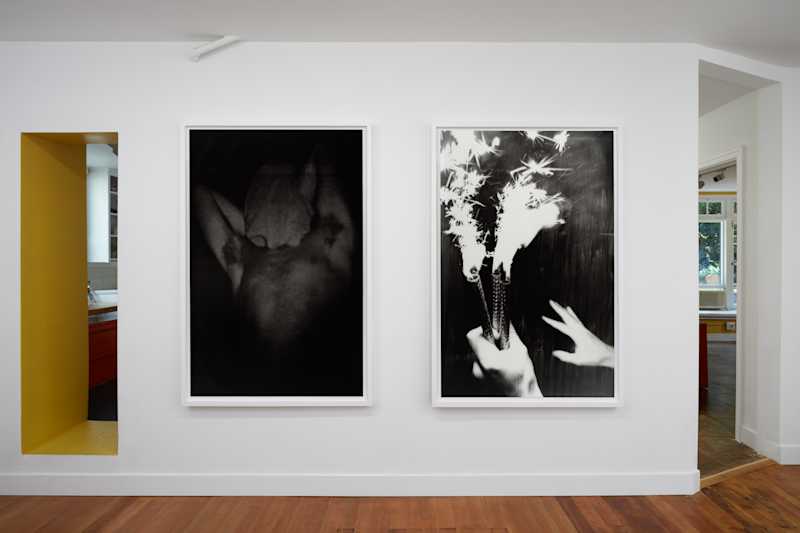
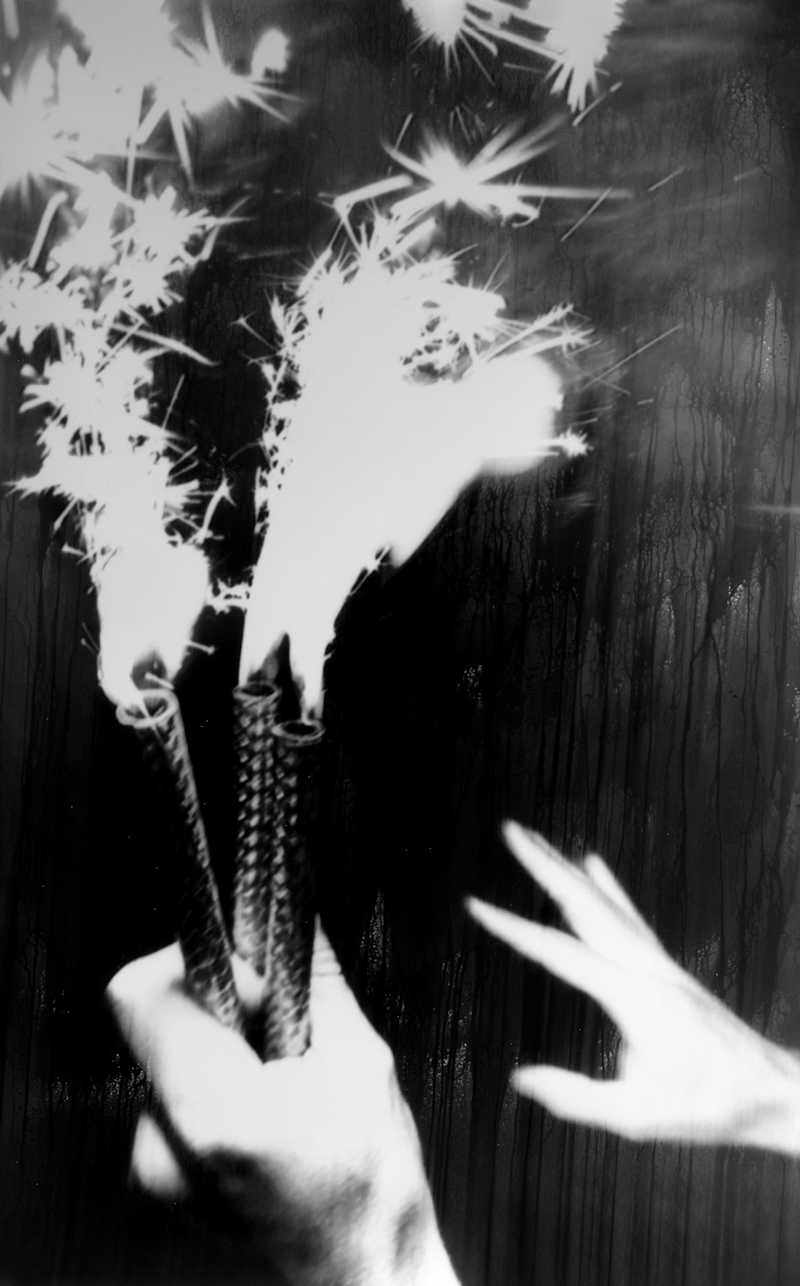
Peter Tomka's (b. 1989, Des Moines, IA) photographs are built almost entirely out of interference. To create the image, Tomka draws from his own archive of photographs, cropping selected images down before converting them into digital negatives. These get exposed through a homemade enlarger built from his bed frame, the mattress cut through to form the aperture. The bed, usually the most private piece of furniture a person owns, becomes the darkroom's central instrument. Subjects arrive obscured and spectral, re-projected and re-exposed by hand through a ritualistic process, each pass adding its own noise, a soft edge, a drifted border, a loss the artist doesn't correct for. What remains resists being pinned to any one body or moment. Rather than preserve an instant, Tomka’s photography records its repeated transformation.
There will be an opening reception on Saturday, September 19 from 6-8pm.